Key Takeaways:
- AI in dispatch helps spot patterns, flag risks, and recommend actions. But humans still make the final call.
- Auto transport complexity (multi-vehicle loads, inspections, dealership stops) makes it a prime candidate for AI-driven dispatch tools.
- AI is already saving hours daily by automating routine tasks like load assignments, status updates, and invoicing.
- Fleets see higher utilization and fewer errors when dispatch, load board, driver app, and payments are fully integrated.
- Generic fleet tech won’t cut it. Auto transport fleets need VIN-aware, inspection-ready, car-hauling-native AI tools.
- The gap is growing: fleets using AI platforms like Super Dispatch are scaling faster and winning more loads than those using manual systems.
Everyone’s talking about AI. And not just generative AI or the likes of ChatGPT and Gemini. From self-driving trucks to robot dispatchers, the logistics world is also buzzing with bold predictions and flashy demos.
But if you’re running an auto transport fleet today, you’re likely asking the real question: What’s actually changing right now for us as car haulers?
It’s normal to be skeptical. Between all the hype and hand-wavy buzzwords, most dispatchers and fleet managers haven’t seen much beyond complicated tech stacks and half-baked “automations.”
Even so, AI isn’t some far-off vision. It’s here, and it’s quickly revamping how loads are assigned, routes are optimized, and carriers are paid, not by replacing dispatchers or drivers, but by taking on the tedious, time-sensitive tasks that eat up their day.
Modern fleet dispatch tools powered by AI are doing what humans aren’t great at: analyzing thousands of data points at once, spotting inefficiencies, and surfacing better recommendations instantly.
In this post, we’ll cut through the noise and look at what’s really changing in dispatch right now.
AI in Dispatch: Separating Reality from Hype
Before we get into how AI is improving dispatch operations, it’s worth clarifying what AI actually does in the context of fleet management, especially for auto transport.
This isn’t some all-knowing system making decisions on your behalf or taking over your dispatch team. AI is still a tool (a really good one) that helps you make better calls, faster.
1. AI handles pattern recognition at scale
A human dispatcher can juggle maybe a dozen loads, routes, or driver schedules in their head at once.
AI can process thousands of data points in seconds—driver locations, traffic conditions, load history, carrier availability, delivery timelines—and spot patterns that would take hours to piece together manually.
2. AI makes recommendations, not decisions
You’re still in control. AI isn’t here to run your dispatch board on autopilot.
Instead, it flags conflicts, suggests optimal assignments, predicts potential delays, and recommends efficient routes. You make the final call.
3. AI learns from your operation
The more you use it, the better it gets. Industry-specific AI models aren’t using generic logistics assumptions but learning from your specific operation, your fleet’s habits, your driver behavior, and your carrier network. That’s how recommendations go from “maybe helpful” to “spot on.”
In short, AI is here to amplify dispatchers, not replace them. It makes the best of your data, takes the guesswork out of routine decisions, and helps your team work faster with fewer errors.
The Traditional Fleet Dispatch Challenges AI Solves
For most car hauling operations, dispatch isn’t broken per se. It’s just buried in manual work.
From assigning loads to answering “where’s my driver?” calls, dispatchers spend hours every day doing things that don’t scale well. That’s where AI steps in, not to replace the role, but to eliminate the grind.
Here are a few everyday dispatch headaches that AI is already helping fix.
Manual load/driver assignment
Matching the right hauler to the right load can feel like a jigsaw puzzle, especially when you’re juggling multiple vehicles, equipment types, and delivery windows.
Say, you need a hauler who can pick up five SUVs from an auction in Kansas and deliver to three dealerships across Texas, and has the right trailer capacity. AI can instantly filter by equipment, location, and availability to surface the best-fit carriers.
Limited visibility
Here are some questions you likely ask/hear frequently:
- “How far out is the driver?”
- “Did the pickup happen?”
- “Has the vehicle been delivered?”
Without real-time updates, dispatchers end up stuck on the phone all day chasing answers.
It goes like this: Shippers call you. Then, the end customers call the shippers. You’re the middleman for every status update. AI-powered platforms tap into real-time GPS data from the driver app to make those updates automatic.
Route optimization guesswork
Deciding the “best route” often comes down to instinct, past experience, and a little Google Maps fiddling.
AI makes this easier. For example, you’ve got pickups at four dealerships across two cities. Should you send two haulers or one? Which route makes the most sense? AI helps identify optimal consolidation opportunities and routing efficiencies you might miss.
Poor fleet utilization
Empty trailers equal lost money. But without data to show where opportunities are being missed, it’s hard to fix.
So, if you’ve got haulers driving home empty after drop-offs in major metros, AI can identify backhaul opportunities and alert dispatchers in real-time.
Reactive carrier management
When something goes wrong, you look back to see what could’ve been done differently. But what if your system could flag weak points before they cost you?
Say, you’ve used the same carrier for months, but didn’t realize they consistently miss delivery windows in a specific region. AI can surface that trend and suggest more reliable options for that lane.
These are the kinds of challenges dispatchers deal with every day. AI isn’t reinventing dispatch. It’s just finally making it manageable at scale.
How AI is Making Dispatch Smarter Right Now
We’ve covered the pain points. Now let’s talk about the actual tools and automations fleets are using today to work smarter.
Here are real, behind-the-scenes upgrades happening inside dispatch operations every day.
Intelligent Load Matching and Assignment
Instead of manually scanning spreadsheets or clicking through dozens of options, AI can instantly match carriers based on:
- Equipment type
- Route preferences
- Load history
- Performance ratings
- Insurance and compliance status
So, if you need a hauler for a multi-car load of electric vehicles, AI quickly identifies carriers who’ve successfully handled similar loads, have space on the right route, and meet all verification requirements.
Predictive Route Optimization
Machine learning can go beyond traffic data. It analyzes delivery history, vehicle types, loading/unloading times, and even regional patterns to suggest the most efficient routes.
For example, a single hauler is picking up cars from four different dealerships. AI helps sequence the stops and build the route to minimize drive time and fuel costs.
Real-Time Fleet Visibility and Automated Communication
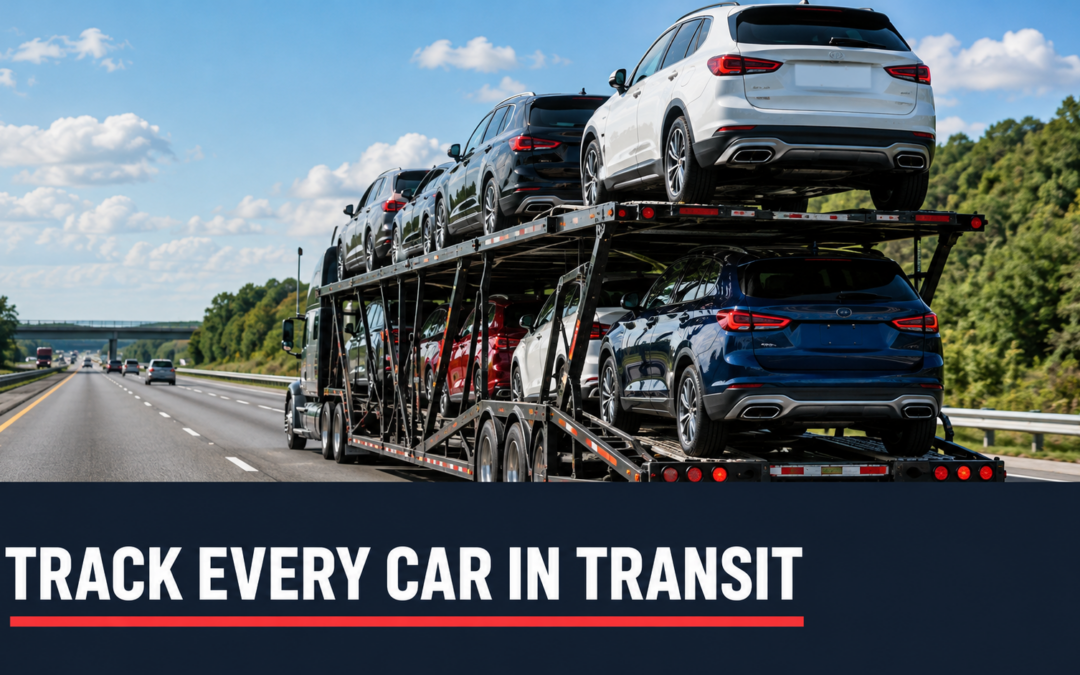
Dispatchers don’t need to chase updates anymore. Real-time GPS data from the driver app feeds directly into the system, triggering automated notifications and live updates.
This means time savings. For instance, shippers using Super Dispatch have saved 1-3 hours daily per dispatcher by eliminating constant status calls.
Predictive Maintenance and Fleet Health Monitoring
AI can spot patterns in vehicle usage and inspection data to flag potential maintenance needs before they become breakdowns.
For instance, a trailer used on high-mileage cross-country runs starts showing inspection anomalies. AI flags it for early service, helping you avoid mid-route failures.
Data-Driven Performance Analytics
Which carriers consistently hit deadlines? Which routes always result in delays? AI tracks performance trends over time, helping dispatchers make wiser decisions.
Here’s a hypothetical case in point: AI spots a pattern that lets you realize that Carrier A consistently delivers two days early in the Northeast, while Carrier B struggles in the same region. So now you know who to book, backed by data.
Automated Workflow Management
AI connects the dots from load posting to payment. That means fewer manual steps for dispatchers and faster turnaround in the back office.
Once a driver delivers the vehicles, the system automatically pulls the inspection photos, creates a digital BOL, and triggers invoicing.
Why Are Car Hauling Fleets Seeing the Biggest AI Impact?
AI is making waves across logistics, but car hauling fleets are feeling the impact more than most. Why? Because auto transport is more complex, more dynamic, and more time-sensitive than general freight.
Let’s break down why fleets like yours are seeing some of the biggest gains:
1. Complexity demands intelligence
Car haulers don’t move pallets. They move high-value vehicles, often across multiple stops, with unique equipment requirements and detailed inspection steps.
AI helps untangle this complexity, whether it’s coordinating multi-pickup loads, managing inspection photos, or navigating time-window constraints from dealerships and auctions.
2. Industry-specific platforms outperform generic tools
Generic fleet software wasn’t built for auto transport. Industry-specific platforms (like Super Dispatch) are.
That means the AI powering it understands VIN scanning, multi-vehicle dispatch, digital BOLs, ePOD workflows, and everything that makes car hauling unique. You’re not trying to fit a square peg into a round tech stack.
3. Integrated ecosystems work together
When your load board, TMS, driver app, and payment system are all connected, AI has complete visibility into your operation.
That’s when it starts working at its full potential: spotting trends, flagging gaps, and automating the right tasks without silos getting in the way.
4. The ROI is crystal clear
Car hauling operates on tight margins. Every hour saved or trailer fully loaded translates directly into profit.
AI doesn’t just improve productivity. It helps fleets get paid faster, reduce costly delays, and scale without adding headcount. One broker cut over $150,000 in annual staffing costs using automation. Shippers have slashed paperwork time from 9 hours to 15 minutes.
Bottom line? The more complex your operation, the more AI can help.
What Matters in AI-Powered Dispatch Software
In auto transport, generic fleet tech often falls short. That being said, for any fleet, here are some core must-haves:
- End-to-end integration: You need your TMS, load board, driver app, and payment tools working together, not patching together third-party systems that don’t sync.
- Real-time GPS visibility: Accurate, app-based location tracking from your drivers so everyone stays in the loop.
- Mobile-first experience: If your drivers can’t easily update loads or capture BOLs on the go, AI insights won’t matter. It starts with clean data from the field.
- Scalability: Whether you’re managing three trucks or thirty, the platform should grow with you without breaking workflows or budgets.
If you’re hauling cars, you need a platform that understands the business:
- Auto transport-native AI: That means algorithms built around VINs, multi-vehicle coordination, dealership routing, and inspection workflows (not bolted-on afterthoughts).
- An intelligent load board: A load board that doesn’t just show available loads but filters them based on equipment, insurance, performance history, and route optimization.
- Digital BOLs and inspection tools: You want streamlined pickup and delivery with integrated photo capture, damage reports, signatures, and instant document sharing.
- Integrated payments: Getting paid fast should be automatic, not another admin task. SuperPay, for example, cuts payout delays from weeks to days.
- Carrier verification and compliance checks: AI can flag expired insurance, missing documents, or red-flagged carriers in real time before they are ever assigned to a load.
The key takeaway: Standalone tools create more problems than they solve. If your TMS, load board, and mobile app aren’t talking to each other, your AI insights will always be incomplete.
An integrated platform like Super Dispatch gives AI the full picture and gives you the clarity to act on it.
The Future of Fleet Dispatch Software is Here
AI isn’t something to “keep an eye on.” It’s already here, and the gap between AI-powered fleets and manual operations is getting wider by the day.
Dispatchers are no longer spending their time making phone calls or juggling spreadsheets. They’re working from platforms that automatically suggest the best carrier, optimize the route, track the vehicle in real time, generate inspection reports, and trigger payment (all without a dozen disconnected tools in between).
And for car haulers, the shift is even more dramatic. Between the complexity of multi-vehicle loads, inspection requirements, tight delivery windows, and regional route planning, auto transport has become the perfect proving ground for intelligent dispatch software.
The fleets that adopt AI now are pulling ahead. The fleets that don’t are getting buried in admin work while competitors win the loads, the shippers, and the margins.
Managing an auto transport fleet? Start a free trial to see how Super Dispatch’s platform can transform your operations for good.