You deliver the vehicle. The customer signs the paper BOL. Now the clock starts on getting paid, and it has nothing to do with how fast you drove.
The signed form has to get back to the office. Someone re-enters the delivery details. The invoice gets built and sent. If you are an owner-operator handling everything yourself, those steps might not happen the same day. If you run a small fleet, they stack up across every completed delivery that week. According to Dashdoc’s 2026 eBOL guide, paper BOL workflows create invoice cycles of 3 to 10 days after delivery compared to same day or next day for eBOL workflows. For car hauling businesses and haulers running several loads a week, that gap between delivery and invoice submission is money sitting on the table.
eBOL software changes the math. The signed delivery record, complete with photos and vehicle condition documentation, reaches the back office the moment the driver finishes the job. But in auto transport, eBOL is not the same tool that general freight carriers use. The workflow is different because the documentation is different: VINs instead of PRO numbers, vehicle condition photos instead of pallet counts, dual-signature inspections instead of dock kiosks.
Key Takeaways
- Shorten the delivery-to-invoice gap: Paper BOL workflows create invoice cycles of 3 to 10 days after delivery compared to same day or next day for eBOL workflows.
- Use auto transport-specific eBOL software: Car haulers need a workflow built around VINs, vehicle condition photos, damage marking, and signatures at pickup and delivery, rather than general freight features like PRO numbers, pallet counts, and dock kiosks.
- Choose a connected workflow, not just a PDF: True eBOL software captures signatures digitally at the point of delivery, attaches photos and timestamps automatically, and syncs the completed document to the carrier’s TMS and the shipper in real time.
- Connect delivery documentation to invoicing: With the Super Dispatch Car Hauler App, eBOLs, inspections, signatures, and ePODs are handled inside the same mobile app, and delivery documentation moves to the back office as soon as the job is complete.
- Keep damage evidence together: Digital inspections attach photos directly to the vehicle record with timestamps and GPS data, while both parties sign in the app at pickup and delivery to create an evidence chain showing the vehicle’s condition before and after transport.
In this guide
Why Paper BOLs Cost Car Haulers Money Every Week
The paper BOL problem is simple. Every handoff between delivering the vehicle and sending the invoice adds time, and time costs money when your fuel bill, insurance premium, and maintenance expenses are already debited from your account.
Here is what that handoff chain looks like with paper. The driver fills out the form at delivery. The form rides back to the office (or the driver re-enters the details at home that night). Someone builds the invoice. The invoice goes to the broker or shipper. Most brokers pay on net-30 to net-60 terms, according to OTR Solutions. If any paperwork is incomplete or the proof of delivery is missing, the invoice gets held. Missing or incomplete proof of delivery is the single most common reason trucking invoices are delayed.
For owner-operators and micro fleets without dedicated billing staff, invoicing often gets pushed to the back burner when priorities shift. The same person driving the truck is also the one building invoices, and after a long day on the road, paperwork is the last thing on the list. According to Integrity Factoring, these delays can push the actual wait time from delivery to payment out to six to eight weeks.
Prompt invoicing matters because brokers typically process payments on a first-in, first-out basis. According to Billed App, submitting an invoice within 24 hours of delivery with all required documentation puts carriers at the front of the payment queue. Paper makes that nearly impossible. eBOL makes it the default.
What eBOL Software Does Differently in Auto Transport
eBOL software for auto transport is an app-based platform that replaces the paper bill of lading with a mobile workflow for capturing vehicle inspections, digital signatures, and delivery confirmation at the truck. It produces an electronic proof of delivery (ePOD) that can be submitted to the back office and routed to the shipper or broker immediately after the vehicle is delivered.
Electronic bills of lading are legally valid in the United States under the Electronic Signatures in Global and National Commerce Act (ESIGN Act), adopted in all states, and the Uniform Electronic Transactions Act (UETA), adopted in all states except New York. These laws grant electronic signatures the same legal weight as wet-ink signatures for commercial transactions, including transportation documents. FMCSA regulations require motor carriers to issue bills of lading for covered interstate shipments under 49 CFR Part 373, and bills of lading may also serve as supporting documents under 49 CFR 395.11.
Auto Transport eBOL vs. General Freight eBOL
When you search for eBOL software, almost every result you find describes general freight or LTL warehouse workflows. Those tools are built around dock kiosks, PRO number assignment, LTL classification, and pallet-level check-in. The NMFTA’s Digital LTL Council released the eBOL API Standard in 2022 specifically for this LTL workflow, and adoption in that segment is accelerating.
An electronic bill of lading in auto transport works differently because the documentation requirements are different. Instead of freight classification and pallet counts, car haulers document VINs, capture four-corner vehicle photos, mark existing scratches and dents, and collect signatures from both parties at pickup and delivery. The inspection is tied to a specific vehicle, not a freight shipment. That distinction shapes every part of the workflow, from what the driver captures on the phone to what the back office uses for invoicing and dispute resolution.
A PDF Is Not a True eBOL
A common misconception, especially among owner-operators moving away from paper for the first time: emailing a photo of a paper BOL or filling out a PDF form on your phone is not the same as using eBOL software. A PDF requires printing, signing by hand, scanning, and emailing, which recreates most of the friction of paper. True eBOL software captures signatures digitally at the point of delivery, attaches photos and timestamps automatically, and syncs the completed document to the carrier’s TMS and the shipper in real time. The operational benefit comes from the connected workflow, not just the file format.
How eBOL Connects Delivery to Invoicing for Car Haulers
The reason eBOL software speeds up payment is not complicated. It removes the gap between completing the delivery and having the documentation ready to invoice.
At Pickup: Inspection, Photos, and First Signature
The driver opens the app, pulls up the assigned load, and confirms the pickup details. The VIN is scanned or entered, and the vehicle’s make, model, and other details populate automatically when the eBOL is connected to the load. Today, AI can assist in the pattern recognition process..
The driver then walks the vehicle and photographs all four sides, marking any existing scratches, dents, or damage directly in the app. The shipper or customer signs on the screen to confirm both parties agree on the vehicle’s recorded condition before transport. The signed pickup record is submitted immediately. The shipper receives a copy in real time, and another copy goes to the carrier’s TMS.
At Delivery: Second Inspection, ePOD, and Instant Submission
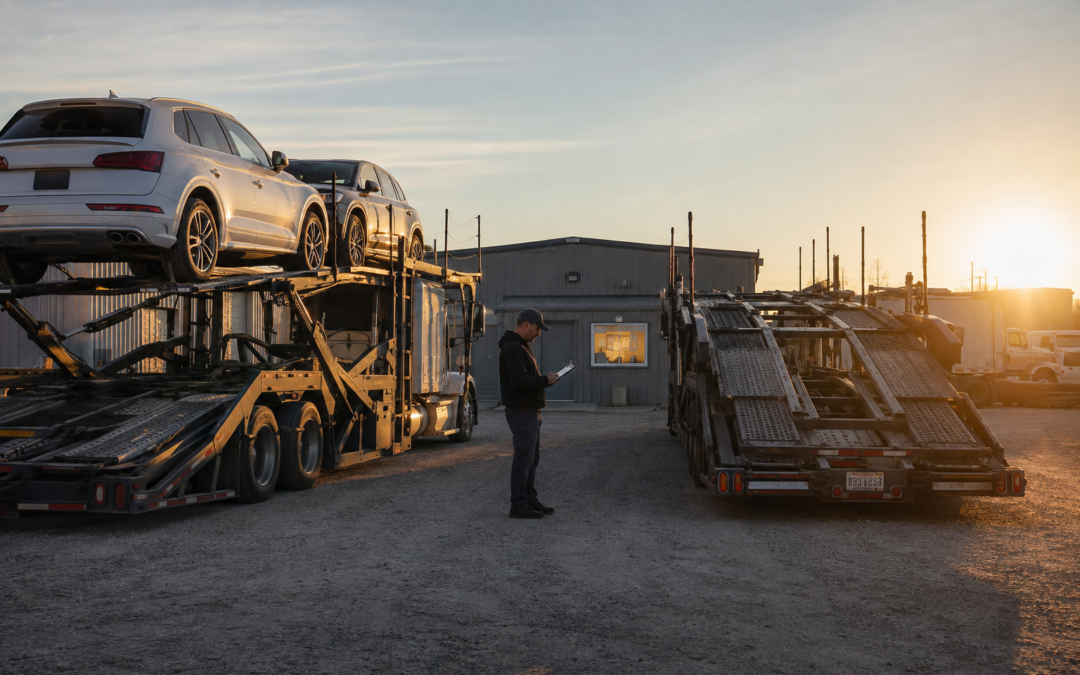
At the destination, the driver records the vehicle’s condition again and collects the delivery signature. This signed delivery record becomes the electronic proof of delivery (ePOD). The moment the signature is captured, the carrier has everything needed to send the invoice or payment request. No paper has to travel back to the office. No one has to re-enter delivery details.
The Car Hauler App from Super Dispatch handles eBOLs, inspections, signatures, and ePODs inside the same mobile app drivers use to find and manage fleets and loads. Delivery documentation moves to the back office as soon as the job is complete.
For carriers using SuperPay, the payment cycle can shorten even further. Carriers using SuperPay get paid in seconds with instant transfer, much faster than standard payment methods. The connection between eBOL, TMS, and integrated payment keeps the full load cycle connected from dispatch through delivery through getting paid.
How Digital Inspections Protect Carriers from Damage Disputes
Beyond payment speed, the inspection record created by eBOL software serves as the carrier’s primary protection in damage disputes. When a claim does come up, the Bill of Lading is the document used to confirm who is responsible. Damage not noted on the BOL at delivery is difficult or impossible to include in a claim after the fact.
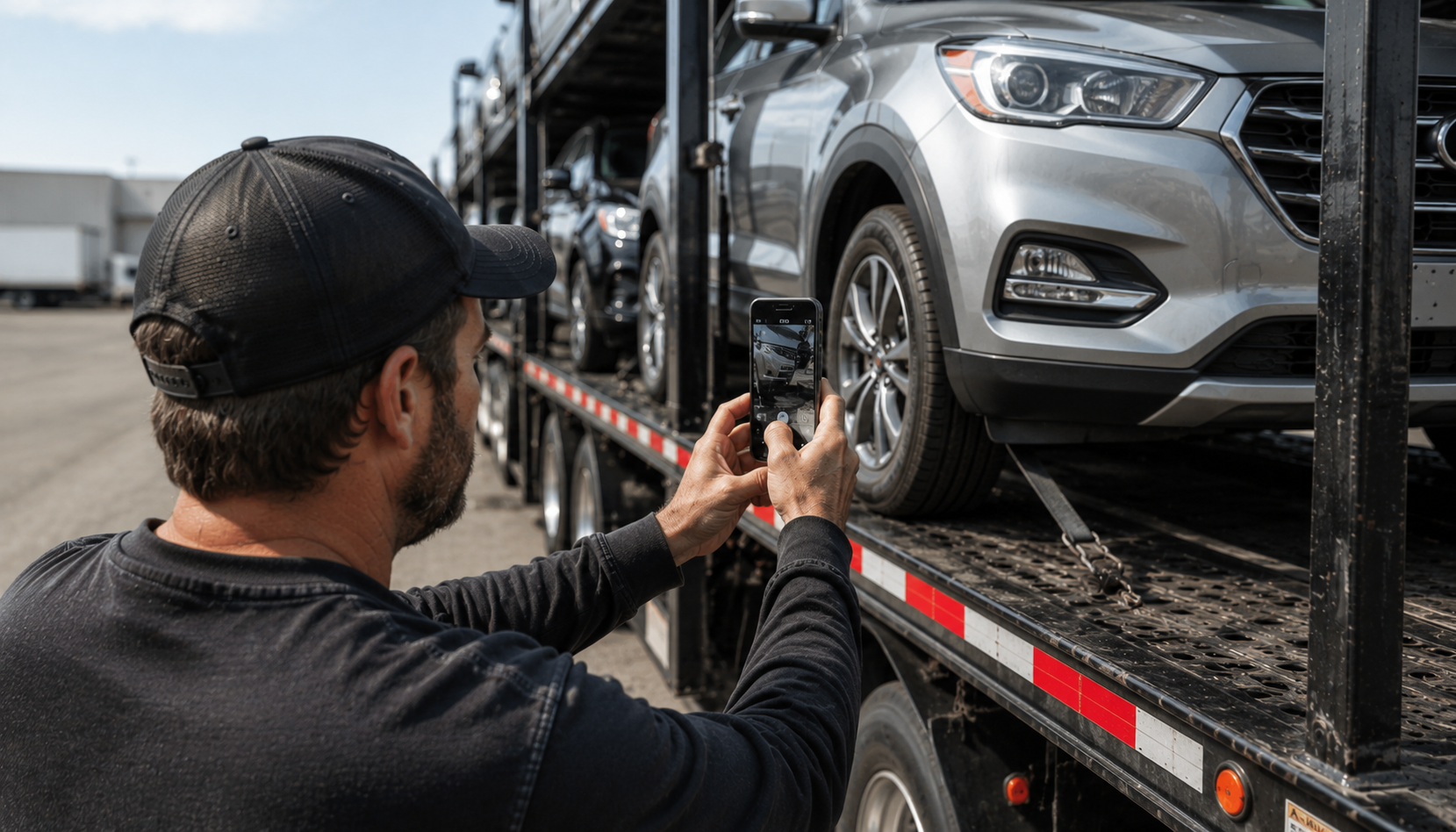
Paper inspections make weak evidence. Handwritten notes can be hard to read, photos may be stored on a separate device and disconnected from the inspection record, and the condition notes may not clearly match what was documented at pickup. A digital inspection changes this by keeping everything in one place. Photos are attached directly to the vehicle record with timestamps and GPS data. Both parties sign in the app at pickup and at delivery, creating an evidence chain that shows what the vehicle looked like before and after transport.
Cargo deductibles vary, but carriers often accept $1,000–$2,500 per claim, while some brokers or shippers require lower deductibles such as $250–$500. For smaller damages that fall near or below the deductible, filing a claim may not be worthwhile. But consistent digital documentation still protects the carrier by making it harder for someone to assign damage that was already there before the load was picked up. Good BOL accuracy starts with consistent inspections and clear photos at both ends of the move.
What to Look for in eBOL Software as a Car Hauler
If you are comparing eBOL tools, the evaluation starts with a basic question: was this software built for auto transport, or is it a general freight tool that happens to digitize a bill of lading?
General eBOL Criteria That Apply to All Carriers
Certain capabilities are table stakes for any eBOL platform, regardless of what you haul. According to Dashdoc, a capable eBOL platform should capture digital signatures with GPS and timestamps, give all parties real-time access to shipment documents, integrate with dispatch and accounting workflows to speed invoicing, work even without cellular service, and securely store completed records for future retrieval.
What Car Haulers Need That General Freight Tools Don’t Offer
This is where most eBOL tools fall short for auto transport. The top results when you search for eBOL software are products built for warehouses, docks, and LTL shipping. None of them address the auto transport workflow.
Car haulers should look for these capabilities on top of the general criteria:
VIN capture that populates vehicle details automatically. The app should scan or accept VIN entry and pull the vehicle’s make, model, and year into the inspection record. Manual entry of vehicle details on every load is the kind of friction that eBOL is supposed to eliminate.
Built-in photo inspection tied to the vehicle record. Photos should be captured inside the same workflow, not in a separate camera app. Each photo needs to be attached to the correct vehicle, with a timestamp, so the inspection record holds together as one document.
Vehicle condition marking at pickup and delivery. The driver should be able to mark scratches, dents, and other existing damage directly in the app during inspection. This is what creates the before-and-after comparison that protects carriers in disputes.
Multi-vehicle load support. Car haulers often carry multiple vehicles on a single trip. The eBOL tool needs to handle inspections and documentation for each vehicle individually while keeping them grouped under the same load.
Load board and TMS integration. If the eBOL sits in a separate app, it creates more data entry later. The tool should connect to dispatch, load details, and delivery records so nothing has to be moved between systems.
Connection to payment and invoicing. The shortest path from delivery to payment starts with an eBOL that can trigger the invoice workflow the moment the delivery signature is captured.
The Super Dispatch Car Hauler App brings these steps together in one mobile workflow. This app for car haulers connects digital inspections, eBOLs, ePODs, Carrier TMS, and Super Loadboard. It currently holds a 4.9 rating across 4,000+ reviews.
Frequently Asked Questions
Is an electronic bill of lading legally valid for auto transport?
Yes. Electronic bills of lading carry the same legal weight as paper BOLs in the United States. The ESIGN Act of 2000 and the Uniform Electronic Transactions Act (UETA), adopted in 49 states, confirm that electronic signatures are valid and enforceable for commercial transactions, including transportation documents. FMCSA permits electronic shipping records under 49 CFR Parts 373 and 395, provided the system meets retention and authentication standards.
What is the difference between a digital BOL and eBOL software?
A digital BOL can refer to any electronic version of a bill of lading, including a scanned PDF of a paper form. eBOL software is a purpose-built platform that captures signatures digitally at the truck, attaches photos and timestamps to the inspection record, syncs with TMS and invoicing systems, and delivers the completed document to all parties in real time. The difference matters because a PDF recreates most of the friction of paper. The benefit comes from the connected workflow, not just the digital file.
How does eBOL software help carriers get paid faster?
eBOL software eliminates the paper return trip between delivery and invoice. When the driver captures the delivery signature and ePOD digitally, the carrier has everything needed to submit the invoice immediately. No waiting for paperwork to reach the office, no manual re-entry. With integrated payment solutions like SuperPay, carriers can get paid instantly.
Do I need eBOL software if I only run one or two trucks?
Owner-operators and micro fleets often benefit the most from eBOL software because they typically do not have dedicated billing staff. Paper BOL delays hit hardest when the same person driving is also the one building invoices. eBOL software lets the driver complete all documentation at the truck and trigger the invoice workflow from the same app, without needing someone in the office to process paper first.
Every Delivery Is an Invoice Waiting to Happen
eBOL software shortens the path from delivering a vehicle to getting paid by keeping inspection, signatures, and delivery records connected in one workflow. For car haulers running multiple loads per week, reducing that gap on every invoice cycle improves cash flow across the entire operation.
Professional shippers and brokers increasingly expect real-time delivery records. An eBOL is becoming part of the service standard for carriers seeking reliable, repeat business. The Super Dispatch platform is built to help shippers and brokers. Try the free Car Hauler App or start a free carrier trial to connect digital inspections, delivery documentation, invoicing, and load management in one place.