Key Takeaways:
- Paper BOLs, manual inspections, and constant phone calls slow down dispatch, costing time, accuracy, and customer trust.
- Mobile apps with GPS, digital BOLs, and inspection tools reduce status calls and errors while streamlining load documentation.
- Real-time data sync enables same-day invoicing and faster payments, improving both cash flow and carrier relationships.
- Professional driver tools increase dispatcher productivity by up to 30%, enabling more loads per day with less stress.
- Super Dispatch’s Car Hauler App is free, making it easy for auto transport businesses to modernize without financial barriers.
Are you or your truck drivers still stuck in the ways of the past, using paper BOLs, phone calls to get load details, and manual logging of every pickup and delivery?
While this isn’t inherently “wrong”, it’s far from efficient. And certainly not optimal.
When you or your drivers use outdated tools (or just phones and paper), you spend hours playing communication middleman and chasing down information. And in auto transport, driver actions and dispatcher workflows are inseparable. So if drivers don’t have the right tools in their hands, dispatch turns into a game of whack-a-mole. A constant, reactive scrambling instead of smooth, predictable execution.
That being said, it doesn’t have to be this way. Modern dispatcher apps designed specifically for car haulers can close the gap between the dispatch board and the carrier on the road. And when you equip drivers with a purpose-built mobile app, your entire operation gets faster, clearer, and far more professional.
Why Don’t General Trucking Apps Work for Auto Transport?
It’s fair to assume most trucking apps are more or less the same. Load assignments, status updates, maybe even a BOL feature. But here’s the thing: car hauling isn’t general freight. And tools built for general freight miss critical details that matter in auto transport.
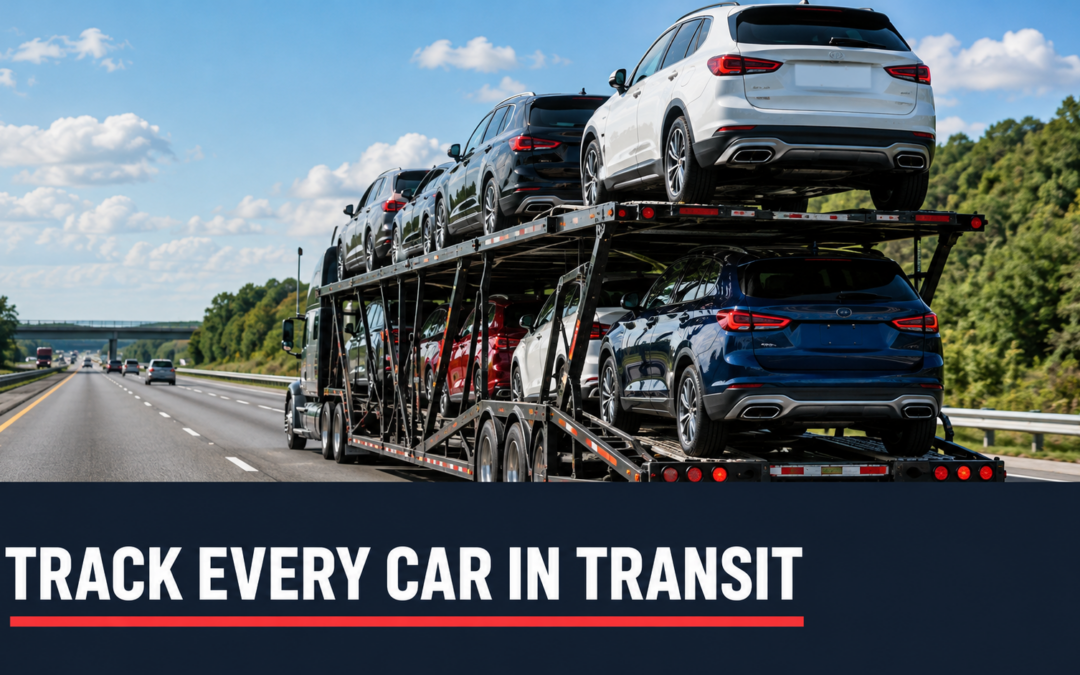
After all, a single car hauler might be moving 6–9 vehicles at once. That means multiple VINs, multiple detailed inspections, condition documentation, and a level of load complexity that freight apps just aren’t designed to handle.
Here are a few areas where general apps fall short:
- No support for multi-vehicle loads: General freight systems tend to assume one load equals one item. That doesn’t work when you’re hauling multiple cars per trip.
- No proper inspection tools: Auto transport requires detailed condition reports, with photos of every vehicle and documentation of existing damage. A basic note or checkmark won’t cut it.
- No VIN scanning: Manually typing out 17-character VINs is plain painful, error-prone, and unnecessary.
- No tie-in to auto transport load boards: General apps connect to freight boards, not vehicle-specific platforms. That’s a problem if you’re trying to keep your haulers loaded efficiently.
- No connection to your dispatch system: Without integration, drivers are left juggling between texts, calls, and random apps. Dispatchers, meanwhile, are copying and pasting load details into spreadsheets. Not exactly cutting-edge, is it?
Bottom line: car haulers aren’t general freight carriers. So why use tools built for general freight?
You need a driver app built specifically for the realities of vehicle transport. One that knows what a VIN is. One that supports photo inspections and integrates with your load board. One that speaks your dispatch system’s language.
That’s what makes the difference between barely functioning and running efficiently.
The Old Way: Why Paper Processes Hurt Dispatch
Paper processes have been around forever in auto transport. But just because something is familiar doesn’t mean it’s optimal.
Paper BOLs Create Dispatch Delays
Every time your driver writes details on a paper BOL or jots a VIN down in a notebook, they’re creating a delay. And every time a dispatcher waits on that paper to resurface, they’re flying blind in the meantime.
Then someone has to retype all that information into your system, increasing the risk of typos and mismatched details. And nothing moves forward—no invoicing, no payment processing—until those papers finally come in. All in all, everything hinges on pieces of paper that can easily get delayed, damaged, or lost.
Phone Tag Wastes Everyone’s Time
Without a modern app, both drivers and dispatchers rely heavily on phone calls. And that creates unnecessary chaos:
- Drivers are constantly interrupted by “Did you pick up yet?” or “How far out are you?” calls.
- Dispatchers burn hours manually chasing down status updates from every driver.
- Without real-time visibility, customers call dispatch over and over, asking for updates.
- These gaps lead to missed expectations, confusion, and avoidable stress for everyone involved.
Phone-tag logistics aren’t just inefficient; they can be soul-suckingly exhausting.
Manual Load Management Slows Drivers Down
When drivers don’t have digital access to load details, they’re forced to operate in the dark. Here’s how it usually goes:
- Drivers jot down pickup instructions from phone calls, risking mistakes and missing details.
- They manually search for addresses and contact information while on the road.
- No mobile view of upcoming loads means no efficient planning ahead.
- Without digital load visibility, routing is clunky, slower, and often less profitable.
Every manual step adds friction and increases the chances of something getting overlooked.
Inspection Documentation is a Nightmare
Auto transport inspections are detailed, and reliance on paper makes them even harder:
- Drivers fill out paper inspection forms and draw damage diagrams by hand.
- Photos sit on personal phones with no organized attachment to the load.
- Dispatchers deal with preventable disputes because documentation is incomplete or not timestamped.
- Paper inspection sheets get lost, torn, or become illegible, creating headaches for drivers and dispatchers alike.
Put simply: without digital inspections, accuracy drops, and disputes multiply.
How Modern Truck Dispatcher Apps Transform Car Hauling
A modern truck dispatcher app has a lot going for it. Here are five ways it can enhance car hauling operations.
Mobile Load Board Access Keeps Trucks Moving
Instead of waiting for a dispatcher to call with the next job, drivers using modern dispatcher apps can browse and book loads right from their mobile phones. With direct access to load boards, they can view real-time load availability, see all the relevant details—pickup and delivery addresses, customer instructions, contact info—and secure jobs instantly.
Drivers can now fill their schedule efficiently, even planning return trips on the fly. For example, a driver dropping off in Atlanta can immediately pick a return load to Chicago, avoiding costly downtime or deadhead miles.
This direct access also lightens the load on dispatchers. Instead of spending time assigning loads manually by phone or text, dispatchers can shift their focus to operational planning, exception handling, and profitability.
Electronic BOLs and PODs Eliminate Paperwork Delay
Gone are the days of waiting hours (or days) for a driver to text over a crumpled, handwritten BOL. With digital documentation built into dispatcher apps, drivers can complete bills of lading on their mobile device at the pickup location, attach required photos, and capture signatures on the spot.
Once the delivery is done, they can submit an electronic proof of delivery (POD) with a tap, syncing it instantly with the dispatch system. If a vehicle is delivered at 2:00 PM, the paperwork can be in the system by 2:05 PM.
For dispatchers, this instant availability of paperwork unlocks faster invoicing, cleaner records, and fewer manual errors from re-entering data. It also shortens the payment cycle, since all necessary documents are already attached and searchable in one system. The days of hunting down driver photos or scanning faxes are over.
Advanced Vehicle Inspections Protect Everyone
Driver apps now include built-in vehicle inspection tools that take the guesswork out of documenting damage. VIN scanners remove the need for manual entry and reduce typos. Drivers are guided through standardized inspection checkpoints, capturing photos for each area and noting any damage.
All inspections are timestamped, GPS-tagged, and signed off by both pickup and delivery contacts directly on the device. This level of digital documentation gives dispatchers and customer service teams powerful tools to resolve disputes quickly.
So, instead of sorting through a driver’s personal photo gallery or unclear sketches, dispatch has a precise visual record of the vehicle’s condition that’s linked directly to the load. That means fewer claims, faster resolution, and less time spent on “he said/she said” investigations.
Real-Time GPS Location Data Provides Visibility
Dispatcher apps provide real-time GPS location data, so dispatchers no longer need to call drivers just to ask “Where are you now?”. Driver locations are updated automatically, enabling proactive planning and better customer communication. Arrival notifications can be automated for pickups and drop-offs, and customers can even track their vehicle status without ever picking up the phone.
This visibility helps shift dispatch operations from reactive to strategic. Exception alerts notify dispatchers only when something goes wrong—like a delay or route deviation—so they can focus on solving real issues instead of performing constant check-ins. In short, GPS data lets dispatchers manage, not micromanage.
Connected Platform Integration Streamlines Everything
Modern dispatcher apps don’t work in silos. They connect directly to your TMS, load board, and payment systems. That means load assignments can be pushed from dispatch to a driver’s phone, including all relevant details.
As the driver progresses through the job, status updates sync automatically. Once completed, the inspection reports, POD, and associated documents all flow back into the system with zero manual entry.
When everything is part of a single, connected ecosystem, the result is smoother operations with fewer delays and errors. Dispatchers aren’t stuck juggling spreadsheets or entering data twice. Payments can be triggered automatically once paperwork is submitted. Accounting and CRM tools stay in sync. A connected platform essentially removes the friction entirely.
What Dispatchers Gain from Equipping Drivers
When drivers use connected mobile apps to manage their loads, dispatchers reap immediate and measurable benefits.
From what we’ve seen:
- Dispatchers save one to three hours a day that would otherwise go to chasing down paperwork and calling for status updates.
- Load completion is instantly visible in the dispatch system, enabling same-day invoicing instead of waiting on scanned BOLs.
- Teams often report a 30% increase in dispatcher productivity. So, fewer people can handle more loads with better accuracy.
- With paperwork submitted digitally at delivery, carrier payments can be processed in just two to three days instead of weeks, improving driver relationships and minimizing back-office overhead.
- Real-time data accuracy means fewer billing errors, fewer manual reconciliations, and fewer fire drills.
But the gains go beyond time savings. When your drivers are equipped with professional-grade mobile tools, your dispatch operation looks sharper and more reliable to shippers and brokers. And in a highly competitive market, that level of operational polish becomes a strategic edge as you’re not just selling transport anymore. You’re selling a well-oiled, tech-enabled logistics machine.
Smarter Dispatching Starts with Smarter Driver Tools
The smartest dispatchers know a simple truth: driver technology is dispatch technology. When car hauler drivers are equipped with mobile apps that handle BOLs, PODs, tracking, and load management in one place, the entire dispatch operation becomes faster, cleaner, and more profitable. Because ultimately, you’re not just streamlining the driver’s workflow: you’re removing friction across the entire operation.
Auto transport operations that invest in professional-grade driver tools are setting the standard. They’re attracting loyal carriers, delivering smoother customer experiences, and outpacing competitors still stuck in manual processes.
Now, here’s the best part: the Super Dispatch Car Hauler App is completely free for drivers. That means you get all the benefits—real-time visibility, instant paperwork, fewer phone calls—without any added cost. Download it today to give it a spin!